
Introduction
In today’s world, access to clean and safe drinking water is a fundamental necessity. Containerized Reverse Osmosis (RO) Plants have emerged as a revolutionary solution to address this pressing need. In this comprehensive guide, we’ll dive deep into Containerized RO Plants, exploring their inner workings, advantages, and answering common questions. Join us on this journey to understand how these innovative systems are transforming the water purification landscape.
Containerized RO Plants: A Closer Look
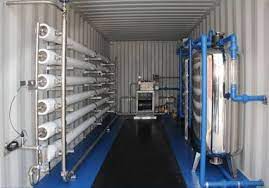
Containerized RO Plants are compact, self-contained units designed for water treatment. These systems utilize a process called reverse osmosis to remove impurities, contaminants, and salt from water, making it suitable for consumption and various industrial applications.
How Do Containerized RO Plants Work?
At the heart of Containerized RO Plants is a semi-permeable membrane that allows water molecules to pass through while blocking impurities. Water is pressurized and forced through this membrane, separating clean water from pollutants. This method ensures a high level of purity, making the water safe for consumption.
Advantages of Containerized RO Plants
- Portability: These units are housed in containers, making them easily transportable to areas with limited access to clean water.
- Cost-Efficiency: Containerized RO Plants offer a cost-effective solution for water treatment compared to traditional systems.
- Quick Deployment: They can be rapidly deployed, providing immediate access to clean water during emergencies or in remote locations.
- Customization: These systems can be tailored to meet specific water quality requirements.
- Low Energy Consumption: Containerized RO Plants are energy-efficient, reducing operational costs.
Key Components
Understanding the essential components of Containerized RO Plants is crucial to appreciate their functionality fully.
1. Pre-Treatment System
Before the water enters the RO membrane, it undergoes pre-treatment to remove larger impurities, ensuring the membrane’s longevity and efficiency.
2. Reverse Osmosis Membrane
The heart of the system, this membrane plays a pivotal role in separating pure water from impurities.
3. Post-Treatment System
Once purified, the water may undergo post-treatment processes to enhance its quality and taste.
4. Monitoring and Control System
Containerized RO Plants are equipped with advanced monitoring and control systems, ensuring optimal performance and safety.
Containerized RO Plants in Action
These versatile units find applications in various sectors:
Municipalities
Municipalities employ Containerized RO Plants to provide clean drinking water to residents, especially in areas facing water scarcity.
Disaster Relief
During natural disasters or humanitarian crises, these portable units quickly provide clean water to affected populations.
Industries
Containerized RO Plants are utilized by industries such as food and beverage, pharmaceuticals, and electronics to meet their stringent water quality requirements.
Remote Communities
In remote communities with limited infrastructure, these plants offer a sustainable source of safe drinking water.
FAQs
Q: Are Containerized RO Plants environmentally friendly? A: Yes, they are. These plants use less energy and produce less waste compared to conventional treatment methods.
Q: How often should the RO membrane be replaced? A: The frequency of membrane replacement depends on water quality and usage but typically ranges from 2 to 5 years.
Q: Can Containerized RO Plants remove all types of contaminants? A: While they are highly effective, they may not remove certain dissolved gases and some volatile organic compounds.
Q: What is the maintenance schedule for these units? A: Regular maintenance includes cleaning the membrane, checking for leaks, and inspecting the control system. Maintenance intervals vary but are typically quarterly or semi-annually.
Q: Are Containerized RO Plants scalable? A: Yes, they can be scaled up or down based on the required capacity, making them suitable for various settings.
Q: Can I use solar power with Containerized RO Plants? A: Yes, these systems can be adapted to use solar power, making them even more sustainable.
Conclusion
Containerized RO Plants have revolutionized the way we approach water purification. With their efficiency, portability, and adaptability, they offer hope for addressing water scarcity and ensuring access to clean water in diverse settings. As we continue to innovate in the field of water treatment, Containerized RO Plants stand as a shining example of sustainable solutions for a cleaner, healthier future.