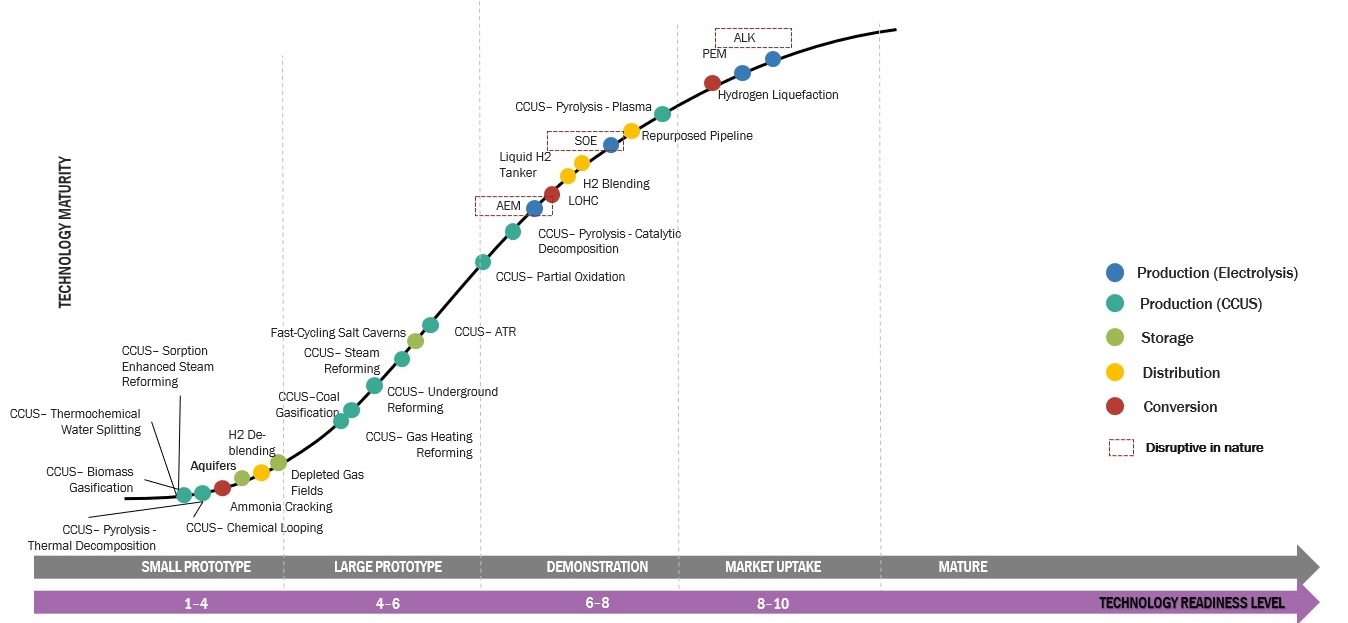

Hydrogen Storage and Transportation Technologies

Hydrogen Storage and Transportation Technologies – Cost and Supply Chain Analysis

Current and evolving hydrogen storage and transportation technologies aim to address the challenges of storing and transporting hydrogen efficiently and safely. Growing recognition is being given to hydrogen as a clean and adaptable energy source that is essential to the shift to a more sustainable energy future. Because of its high energy content and potential for zero-emission applications, hydrogen stands out as a possible answer as the demand for renewable energy sources rises. But in order to handle the special qualities and difficulties of hydrogen, effective transportation and storage methods are needed for its broad use as an energy carrier.
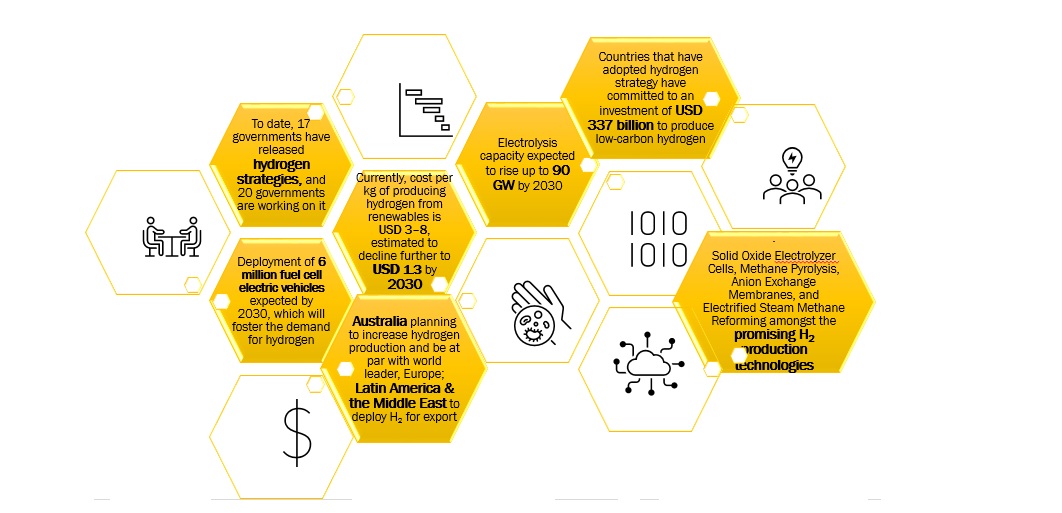
Hydrogen Technology Solutions

Hydrogen Technology Solutions – Green Hydrogen, Gray Hydrogen or any other technology. By region and application.
Green Hydrogen Technology:
Green hydrogen is produced through electrolysis, using renewable energy sources such as wind, solar, or hydroelectric power. It offers the advantage of being entirely emissions-free, as the electrolysis process does not generate carbon emissions. Regions with abundant renewable energy resources, such as solar or wind, are well-suited for green hydrogen production. These regions can leverage their renewable potential to produce green hydrogen at scale, contributing to decarbonization efforts.

The Green Hydrogen Revolution: Powering the Sustainable Future

Green hydrogen is a form of hydrogen gas that is created by the electrolysis process utilizing renewable energy sources like sun, wind, or hydropower. Using electricity, this process divides water (H2O) into its component parts, hydrogen (H2) and oxygen (O2). Green hydrogen is created without emitting carbon dioxide, in contrast to gray or blue hydrogen, which is produced from fossil fuels or natural gas.